
Technology has become critical to nearly every part of the business, but many IT teams haven't expanded and upskilled at the same pace as the demands placed on them.
Today's IT teams are responsible for far more than troubleshooting devices or managing infrastructure. They're supporting hybrid workforces, securing increasingly complex environments, managing Microsoft 365, evaluating AI tools, and helping drive business initiatives that rely on technology.
As responsibilities grow, many teams find themselves spending more time responding to immediate needs than focusing on strategic improvement. Projects get delayed, modernization efforts stall, and long-term planning takes a back seat at a time when the business demands a more proactive, rather than reactive, approach.
The issue often isn't talent or commitment. It's that the volume and complexity of work have outgrown the resources available to support it.
Why IT Teams Are Under More Pressure Than Ever
Most IT leaders can point to a growing list of responsibilities that didn't exist just a few years ago.
Organizations are adopting new applications, strengthening cybersecurity programs, supporting remote employees, managing cloud environments, and evaluating emerging technologies—all while maintaining the systems employees rely on every day.
As new priorities are added, few older responsibilities disappear. The result is a workload that continues to grow, even when team sizes remain the same.
When resources are stretched too thin, strategic initiatives are often the first to get pushed down the priority list, making it harder for IT efforts to stay aligned with the business’s mission and strategic roadmap.
The Warning Signs of an Overextended IT Team
IT professionals are experts at keeping things running, which can make underlying resource challenges difficult to spot. Over time, however, the strain typically becomes visible throughout the organization.
Strategic Projects Continuously Get Delayed
Roadmap initiatives, modernization efforts, process improvements, and infrastructure projects remain on the list quarter after quarter while operational demands consume available resources.
Reactive Work Dominates the Day
When most of the team's effort is spent responding to tickets, troubleshooting issues, and handling urgent requests, progress on longer-term priorities becomes difficult.
Growth Outpaces Support Resources
New locations, users, applications, and vendors all increase complexity. Without corresponding support, IT teams are often expected to manage significantly more with the same resources.
Specialized Expertise Is Difficult to Maintain
No internal team can be experts in every technology, platform, and emerging trend. As new priorities arise, gaps in specialized knowledge can slow projects or force teams to divert attention from other critical initiatives.
The Organizational Risks of IT Overload
IT burnout isn't simply a workforce challenge. It's a business risk.
When IT teams are stretched too thin, critical projects take longer to complete, preventative maintenance gets delayed, and security initiatives become harder to prioritize. Over time, that can increase operational and cybersecurity risk.
Cybersecurity is a particularly important concern. ISACA's State of Cybersecurity research found that 55% of cybersecurity teams report being understaffed, while 63% cite the increasingly complex threat landscape as their biggest source of stress.
There's also a knowledge-risk component to consider. In many organizations, critical systems and processes depend heavily on one or two key employees. If those individuals leave or become unavailable, valuable institutional knowledge can leave with them.
Why Hiring Alone Doesn't Always Solve the Problem
Adding staff can certainly help, but it isn't always the complete solution.
Modern IT environments require expertise across cybersecurity, cloud platforms, Microsoft 365, compliance, networking, backup and disaster recovery, and increasingly, AI. Finding a single individual with deep expertise across all those areas can be both difficult and expensive. And even when that expertise exists, technical strength alone doesn’t always translate into the business and leadership perspective required to support long-term strategic planning.
Even organizations actively hiring continue to face skills gaps. According to McKinsey, 60% of companies cite the scarcity of tech talent and skills as a major inhibitor of their digital transformations.
The challenge isn't always having more people. Often, it's having access to the right expertise when it's needed.
Five Questions Business Leaders Should Ask
If you're unsure whether your IT team has the resources it needs, consider the following questions:
- Are important technology projects consistently delayed?
- Does your IT team spend most of its time reacting to issues?
- Would a key employee's absence create significant disruption?
- Are cybersecurity initiatives difficult to prioritize and complete?
- Do you have access to all the specialized technical expertise your business requires?
- Is your team fighting their toolset?
If several of these questions raise concerns, it may be time to evaluate whether additional support is needed.
How Co-Managed IT Expands Capacity and Expertise
Instead of expecting one person or a small department to manage every technology challenge, organizations gain access to additional resources and specialized expertise when and where they need it most.
That support may include:
- Cybersecurity monitoring and threat management
- Microsoft 365 administration and optimization
- Infrastructure upgrades and cloud projects
- Compliance and risk management initiatives
- Help desk overflow and end-user support
- After-hours coverage
- Specialized expertise for emerging technologies, including AI
Internal IT leaders remain in control of strategy, priorities, and day-to-day decision-making while gaining a trusted extension of their team.
This approach can help reduce the burden of routine operational work, accelerate project completion, and provide access to specialized skill sets that may be difficult or costly to hire in-house. As technology environments become more complex, many organizations are finding that supplementing internal resources is a more flexible way to scale support than relying solely on additional headcount.
Supporting Your Team Before Burnout Becomes a Problem
Burnout is rarely the result of a lack of dedication. More often, it's a sign that business demands have outpaced available resources or that key responsibilities aren’t aligned with the right skill sets.
As reliance on technology continues to grow, organizations need to ensure their IT teams have the support necessary to manage day-to-day operations while still moving strategic initiatives forward. That may involve hiring additional staff, investing in automation, strengthening processes, or partnering with external experts.
The most effective organizations don't wait until critical projects stall or key employees become overwhelmed. They proactively evaluate gaps, reduce single points of failure, and build support systems that allow IT teams to focus on work that drives the business forward.
When IT has the right resources in place, the benefits extend far beyond the department itself—improving security, accelerating innovation, and creating a stronger foundation for long-term growth.
Ready to Give Your IT Team Additional Support?
f your team is spending more time reacting than planning, or if critical projects continue to compete with day-to-day demands, it may be time to explore a different approach.
Loffler's co-managed IT services are designed to complement your internal IT team with flexible support, specialized expertise, and additional resources where they're needed most. Whether you're looking to strengthen cybersecurity, optimize Microsoft 365, tackle stalled projects, or simply free up your team to focus on strategic priorities, we're here to help.
For organizations looking to simplify their technology environment, we can help implement a proven, integrated toolset built around best practices.
Contact Loffler today to start a conversation about how co-managed IT can help your team operate more efficiently while reducing risk and supporting long-term business growth.
Read Next: Predictable Budgeting with an MSP: How Outsourcing IT Brings Financial Stability
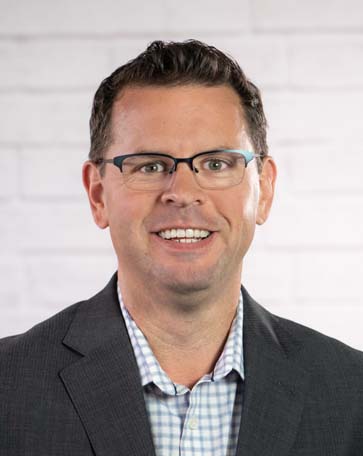
Nick Johnson is the Program Manager of IT Solutions at Loffler Companies.